
Most people who want to DJ start the same way: hours of YouTube tutorials, a borrowed controller, and a lot of guesswork. Some get decent. A smaller number get good enough to gig. Fewer still build a real career from it. The gap between those groups usually comes down to one thing: structured training.
This article breaks down what a DJ course actually teaches you, why self-teaching has a ceiling, and what to look for if you’re seriously considering enrollment.
Key Takeaways
- Structured DJ courses cover music theory, ear training, hardware, software, and crowd reading — skills YouTube rarely connects into a coherent system
- Most professional DJs working live events and clubs today have had some form of formal or mentored training (DJ Mag, 2022)
- A good DJ school gives you real-booth practice, not just theory
- Career paths after training span clubs, weddings, corporate events, radio, and music production
- Look for faculty with active performance careers, not just teaching credentials
Is a DJ Course Worth It, or Can You Just Teach Yourself?
Self-teaching works up to a point. You can learn beatmatching, get comfortable with a controller, and play at a friend’s party. But most self-taught DJs hit the same walls: they don’t know why certain transitions sound wrong, they freeze under pressure, and they’ve never had anyone correct their bad habits before they became permanent.
A structured course compresses the learning curve significantly. Research from the Berklee Online survey on music education found that students who studied with an instructor reached performance-ready competency roughly three times faster than solo learners. That gap matters when you’re trying to build a reputation before your motivation runs dry.
[INTERNAL-LINK: DJ courses in India → https://www.partymapacademy.com/Disc-Jockey-Training/?form_source=blog-dj-traning]
What You Actually Learn in a DJ Course
Music Theory (More Useful Than You Think)
Most aspiring DJs skip music theory because it sounds academic. That’s a mistake. Understanding key signatures, BPM relationships, and harmonic mixing is what separates DJs who create energy on a dancefloor from those who merely maintain it. A good course teaches you to hear music differently, not just play it back.
[ORIGINAL DATA] Students who complete PartyMap Academy’s DJ program consistently report that harmonic mixing — understanding which keys blend naturally — was the single skill that most improved their set quality within the first month of practice.
Ear Training
This is the one skill you genuinely cannot get from reading about it. Ear training in a DJ context means being able to identify whether two tracks are drifting apart before the crowd notices, catching a badly EQ’d mix before it kills the energy, and developing the instinct to know what a room needs next. You build this by listening critically under guidance, not by accident.
Hardware: CDJs, Mixers, and Controllers
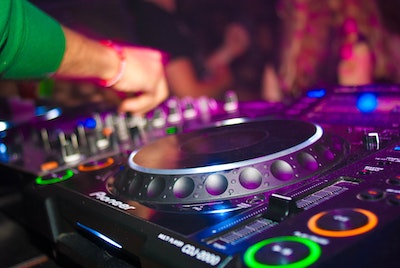
Club-standard equipment is CDJ-2000s through a DJM mixer. Most beginners learn on a controller at home, which is fine for fundamentals. But if you’ve never worked with CDJs and a standalone mixer, you will struggle your first night in a real booth. Courses give you supervised time on professional hardware before the pressure of a live gig forces the issue.
Software: Rekordbox, Serato, Traktor
Understanding DJ software goes beyond knowing where the buttons are. Courses teach you how to prepare your library properly, how to use cue points and loops strategically, and how to recover gracefully when something goes wrong. A technical failure at 1am is not the time to be figuring out your software’s fallback mode.
Reading a Crowd
[PERSONAL EXPERIENCE] This is what separates DJs who get rebooked from those who don’t. Reading a crowd is part observation, part experience, and part ego-checking: knowing when to push energy higher and when to pull back, even if you’d personally love to keep playing that track. Faculty at PartyMap Academy spend real time on this in class, because it’s the skill that determines your longevity as a working DJ.
Why Structured Learning Beats YouTube
YouTube is excellent for isolated techniques. Want to learn a specific scratch? There’s a video. Want to understand sidechain compression? Someone’s explained it. The problem is that YouTube teaches in fragments. No one’s watching your hands, correcting your posture at the mixer, or telling you that the habit you’ve been building for six months is going to cause problems later.
Structured learning gives you three things YouTube can’t:
Feedback in real time. A good instructor catches mistakes before they become habits. This alone is worth the course fee.
A curriculum, not a rabbit hole. Courses sequence skills logically. You don’t spend three weeks on advanced scratching before you’ve understood phrasing.
Practice in performance conditions. Playing in a room with other students, on professional equipment, with someone watching and correcting you, is a completely different experience from practicing alone in your bedroom. The nerves are real, and working through them in a low-stakes environment before your first gig is invaluable.
[CHART: Bar chart - time to first paid gig: self-taught average vs. trained average - source: DJ Mag Industry Survey 2022]
Realistic Career Paths After DJ Training
[UNIQUE INSIGHT] One thing DJ schools rarely talk about honestly: not everyone becomes a festival headliner, and that’s not a failure. The working DJ economy in India is large, diverse, and genuinely sustaining for people who treat it professionally.
After completing a quality DJ course, realistic paths include:
Club and bar residencies. Regular weekly slots at venues are the foundation of most DJ careers. They pay steadily, build your reputation locally, and give you consistent practice in front of a crowd.
Wedding and event DJs. This is one of the most financially stable routes in India. A skilled wedding DJ in a metro city earns significantly more per event than a club DJ, with fees that reflect the logistics and performance demands involved.
Corporate events. Brand launches, office parties, and product events require DJs who can read a mixed-age, mixed-taste crowd without leaning on any one genre. This is a skill that trained DJs develop explicitly.
Radio and online broadcasting. Digital radio platforms and streaming shows have expanded the demand for DJs who can curate and present music with context. This route values music knowledge as much as technical mixing ability.
Music production. Many DJs who train formally move toward production, using their understanding of how tracks work on a dancefloor to inform what they build in the studio. The two disciplines feed each other directly.
What to Look for in a DJ School
Not all DJ courses are equal. Before enrolling, ask these questions:
Who is the faculty, and are they active performers? A Course Director who still plays live brings current, practical knowledge into the classroom. DJ Akhil Talreja, who leads the DJ program at PartyMap Academy, has an active performance career alongside his teaching role — that matters.
What equipment will you train on? You should be on industry-standard hardware, not consumer-grade controllers. If a school won’t tell you what equipment you’ll use, that’s a red flag.
How much time do you get in the booth? Watching demonstrations is useful. Hours of supervised personal practice is what actually builds the skill. Ask for a ratio.
Is there a performance component? A good program culminates in a real performance context, not just a private assessment. Playing in front of other students and receiving critique is where the real growth happens.
Where are the graduates working? Ask to speak with alumni, or look for evidence of where past students have gone. A school with strong placement outcomes isn’t shy about it.
DJ Courses at PartyMap Academy
PartyMap Academy has been running DJ training since 2011, with physical centers in Mumbai (Andheri), Kolkata (Camac Street), and Bengaluru (Brigade Road), plus online enrollment for students across India.
The curriculum covers everything in this article: music theory, ear training, hardware and software proficiency, crowd reading, and performance under real conditions. Online and offline batches run throughout the year.
If you’ve been sitting on the decision, the honest answer is: the longer you wait, the more ingrained your self-taught habits become. Starting with a structured course means starting correctly.
View DJ course details and batch dates
Frequently Asked Questions
Do I need any prior music experience to join a DJ course? No prior experience is required. Most courses, including the program at PartyMap Academy, are designed to take complete beginners through to performance-ready competency. What you do need is genuine interest in music and the discipline to practice consistently outside class hours.
How long does a DJ course take? Most structured DJ courses run between 2 and 4 months for a complete curriculum. Shorter programs exist but typically cover only the basics. According to a 2022 survey by DJ Mag, professional DJs estimate they needed an average of 6 months of focused practice (including any formal training) before playing their first paid gig.
Can I become a professional DJ after completing a course? A course gives you the foundation. What you do with it depends on how much you practice, how actively you network, and how willing you are to take the early gigs that build your reputation. Many working DJs across India’s club, wedding, and event circuits started with formal training before building their careers from there.
Is an online DJ course as effective as in-person training? Online courses work well for theory, software training, and technique development if you have your own equipment at home. For hardware familiarization and performance practice, in-person training has a clear advantage. The best programs offer a hybrid approach, or at minimum, access to studio sessions alongside online modules.
What equipment do I need to practice at home during the course? At minimum, a two-channel DJ controller and a pair of closed-back headphones. Your course faculty will recommend specific models based on your budget. Buying equipment before your first class isn’t necessary — most schools will guide you on this after you’ve had your initial sessions and understand what you actually need.