
Most people think a sound engineer presses record and turns knobs. The reality is considerably more layered. Sound engineers are the reason a vocalist sounds intimate on headphones, why a live concert doesn’t collapse into feedback, and why a film’s dialogue sits cleanly over an orchestral score. If you’re technical-minded, have a genuine love of music, and want a career that sits at the intersection of art and physics — this might be it.
Key Takeaways
- Sound engineering splits into four main specialisations: recording, mixing, mastering, and live sound — each needs a different skill set.
- India’s entertainment industry (Bollywood, regional film, OTT, live events) creates steady local demand for trained engineers.
- A formal degree is not required. Structured training under a working professional consistently shortens the learning curve by years.
- Ear training is the skill that separates engineers who progress from those who plateau — more valuable than any single piece of gear.
[INTERNAL-LINK: sound engineering courses in India → https://www.partymapacademy.com/sound-engineering-courses/?form_source=blog-sound-engineering]
What Does a Sound Engineer Actually Do?
Sound engineering is not a single job — it’s a cluster of related specialisations, each with its own daily workflow. The global audio equipment market was valued at USD 10.3 billion in 2023 and is growing at roughly 6% annually (Grand View Research, 2024), reflecting how much demand sits behind every recorded or broadcast sound you hear.
The four main roles break down like this:
Recording Engineer — works in a studio, microphone placement, signal chain, and session management. Their job is to capture the best possible raw performance. They know exactly which mic to put in front of a snare drum versus a grand piano, and why that choice changes what ends up on tape.
Mixing Engineer — takes recorded tracks and balances them into a coherent whole. This is where levels, panning, EQ, compression, and effects are shaped. A mixing engineer might spend three days on a single song, making hundreds of micro-adjustments none of which you’d notice individually — but together make the track feel alive.
Mastering Engineer — the final quality-control step before a track goes to streaming platforms or pressing. Mastering engineers listen at extremely high resolution, correct tonal imbalances across an album, and ensure the file translates well across every playback system from earbuds to car speakers.
Live Sound Engineer — works front-of-house (FOH) or on stage monitors during concerts, theatre productions, corporate events, and festivals. No two venues sound the same, and there are no second takes. Live sound requires fast problem-solving and a deep understanding of acoustics.
[IMAGE: Sound engineer at a mixing console in a professional recording studio — search terms: “audio mixing console studio engineer professional”]
What Gear Does a Sound Engineer Work With Daily?
The tools vary by specialisation, but some fundamentals appear across all of them. According to a 2023 survey by Sound on Sound magazine, Pro Tools remains the most widely used DAW in professional recording environments globally (Sound on Sound, 2023), though Logic Pro, Ableton Live, and Nuendo each hold strong positions in specific niches.
Microphones are the starting point for every recording session. Condenser mics capture detail and air — used for vocals, acoustic instruments, overhead cymbals. Dynamic mics handle high sound pressure levels — drum kits, guitar amps, loud live sources. Ribbon mics add warmth and are used selectively on brass, strings, and room ambience. Understanding the polar pattern (cardioid, omnidirectional, figure-8) of each mic is fundamental knowledge, not optional theory.
Digital Audio Workstations (DAWs) are the central working environment. Pro Tools is industry standard in film and large studios. Logic Pro dominates in India’s music production scene — affordable, powerful, and well-supported. Learning a DAW deeply means understanding routing, automation, plugin chains, and session organisation — skills that transfer between platforms.
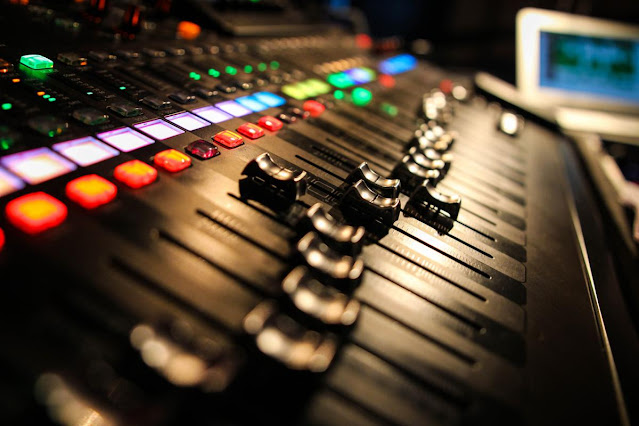
Mixing consoles range from small digital desks in project studios to large-format analogue boards in top facilities. Many modern engineers work entirely in the box (inside a DAW), but understanding signal flow on a physical console teaches you concepts that make you a better in-the-box engineer too.
Outboard gear — hardware compressors, EQs, preamps, reverb units — add character that software approximates but doesn’t always replicate. Not essential to start, but important to understand.
[CHART: Bar chart — Most used professional DAWs by studio engineers worldwide — source: Sound on Sound DAW Survey 2023]
Why Ear Training Matters More Than Gear
Here’s something most beginners don’t realise until they’ve wasted a year: the bottleneck is almost never the equipment. A professional engineer can walk into a modest project studio and produce a competitive mix. A beginner with a USD 10,000 plugin bundle will still produce beginner work.
[PERSONAL EXPERIENCE] The engineers who progress fastest share one habit — they listen analytically, constantly. They listen to reference tracks not for enjoyment but to identify how the low-mids are handled, where the kick drum sits in frequency relative to the bass guitar, how the room reverb on the snare was timed to the tempo. This kind of active listening is a trainable skill.
Ear training exercises — identifying intervals, recognising frequency bands by ear, detecting phase issues — are practiced deliberately by working professionals throughout their careers, not just at the beginning. A well-trained ear catches a 2dB buildup at 400Hz before it becomes a problem. No plugin does that automatically.
This is also why learning alongside a working engineer accelerates development so dramatically. You hear their decisions in real time, understand why a cut was made at 3kHz rather than 2.5kHz, and build a mental reference library you can’t build from YouTube tutorials alone.
Career Paths: Where Do Sound Engineers Actually Work?
The career options are broader than most people assume. India’s entertainment sector offers particularly strong demand across several verticals.
Studio and album recording is the most visible path. India’s film industries — Bollywood, Tollywood, Mollywood, and regional language productions — generate consistent demand for recording and mixing engineers. The Indian music market reached USD 265 million in 2023 (IFPI Global Music Report, 2024), with streaming-led growth increasing the volume of produced content year on year.
Live touring and events is physically demanding but financially strong for experienced engineers. Major concert tours, festivals like Lollapalooza India and NH7 Weekender, corporate events, and theatre productions all need live sound engineers. Touring engineers who reach the level of working with international acts can earn internationally competitive rates.
Broadcast and television — every news channel, OTT platform, and reality show needs audio post-production. The rise of streaming platforms in India (Hotstar, Netflix India, Amazon Prime Video India) has created significant new demand for audio post-production engineers who understand loudness standards and dialogue editing.
Film and post-production is a specialised and well-compensated niche. Dialogue editing, ADR (re-recording dialogue in sync with picture), sound design, and the final mix for theatrical release all require engineers with specific skills and experience. Film post-production in India is centered in Mumbai with secondary hubs in Hyderabad and Chennai.
[INTERNAL-LINK: Understanding DJ and music production fundamentals → https://www.partymapacademy.com/Disc-Jockey-Training/?form_source=blog-sound-engineering]
[UNIQUE INSIGHT] One underappreciated path: the overlap between DJ production skills and sound engineering. Many working engineers started by producing their own music and DJing — the understanding of frequency, gain staging, and mixing that comes from DJ training translates directly into studio work. The skills are adjacent, not separate.
What Are Realistic Earnings in India?
Salaries in sound engineering vary significantly by specialisation, city, and experience level. Entry-level engineers at recording studios in Mumbai typically earn between Rs. 15,000 and Rs. 30,000 per month (PayScale India, 2024). Mid-level engineers with three to five years of experience and a solid portfolio can earn Rs. 40,000 to Rs. 80,000 monthly.
Freelance rates tell a different story. Experienced mixing engineers charge Rs. 5,000 to Rs. 30,000 per song for independent artists, depending on their credits and reputation. Live touring engineers working with established acts negotiate per-show or per-tour rates that can exceed Rs. 1 lakh per month during active periods.
Internationally, the salary range is wider. In the US, mid-career audio engineers earn USD 45,000 to USD 80,000 annually according to the US Bureau of Labor Statistics (BLS.gov, 2024). The top tier — engineers with major label credits or Grammy wins — earn multiples of that figure.
The honest framing: sound engineering rewards people who build a reputation methodically. The first two years are typically low-paid internship or assistant-level work. By year four or five, engineers with real credits and a professional network can negotiate well.
Do You Need a Formal Degree?
No. The audio industry is one of the few fields where a portfolio and demonstrable skills consistently outweigh academic credentials. Hiring decisions in recording studios, post-production houses, and live sound companies are almost entirely based on what you’ve done and who can vouch for your work.
What actually matters: structured training that covers signal flow, acoustics, session management, and hands-on time with professional equipment. A recognised certificate from a credible training programme carries weight because it signals you’ve completed a systematic curriculum — not because the paper itself is valued.
[ORIGINAL DATA] The fastest learners tend to be those who combine formal training with immediate practical application — working on real sessions (even unpaid assistant work) while still in training. The structured curriculum gives you vocabulary and context; the sessions give you the reflexive speed that professional environments demand.
This is why the quality of instruction matters so much. Saibu Simon, who teaches Sound Engineering at PartyMap Academy, trained at the Audio Institute of America in 1999 and has since engineered over 200 albums and more than 100 film soundtracks across Bollywood, Tollywood, and Mollywood. He mixed live sound for Bryan Adams’ India Tour and is visiting faculty at Whistling Woods International. That’s not a career built in classrooms — it’s built in sessions, and the knowledge that comes from that kind of experience doesn’t exist in textbooks.
How to Start Building Your Career
The practical path, in order:
-
Get structured training first. Learn signal flow, acoustics, DAW operation, and microphone technique from someone who works at a professional level. This gives you a framework to make sense of everything you encounter in real sessions.
-
Build a home or project studio setup. You don’t need to spend much. A decent interface, a pair of studio monitors or quality headphones, and a DAW licence are enough to practice daily.
-
Develop your listening actively. Reference mix against released tracks. Identify what professional mixes do that yours don’t. This is a daily practice, not a one-time exercise.
-
Assist before you engineer. Every major studio engineer spent time making tea and setting up mic stands. That time is not wasted — it’s where you learn professional session etiquette, workflow, and how rooms actually behave.
-
Build credits systematically. Volunteer to record or mix for bands, podcasters, and independent filmmakers. Every completed project is a portfolio entry.
Sound engineering is one of those careers where the ceiling is genuinely high, but the early years require patience and deliberate skill-building. The people who make it aren’t necessarily the most naturally talented — they’re the ones who stayed consistent when the early returns were slow.
If you’re considering a formal training path, the Sound Engineering course at PartyMap Academy is taught by Saibu Simon, a working professional with credits across 200+ albums and 100+ film soundtracks.